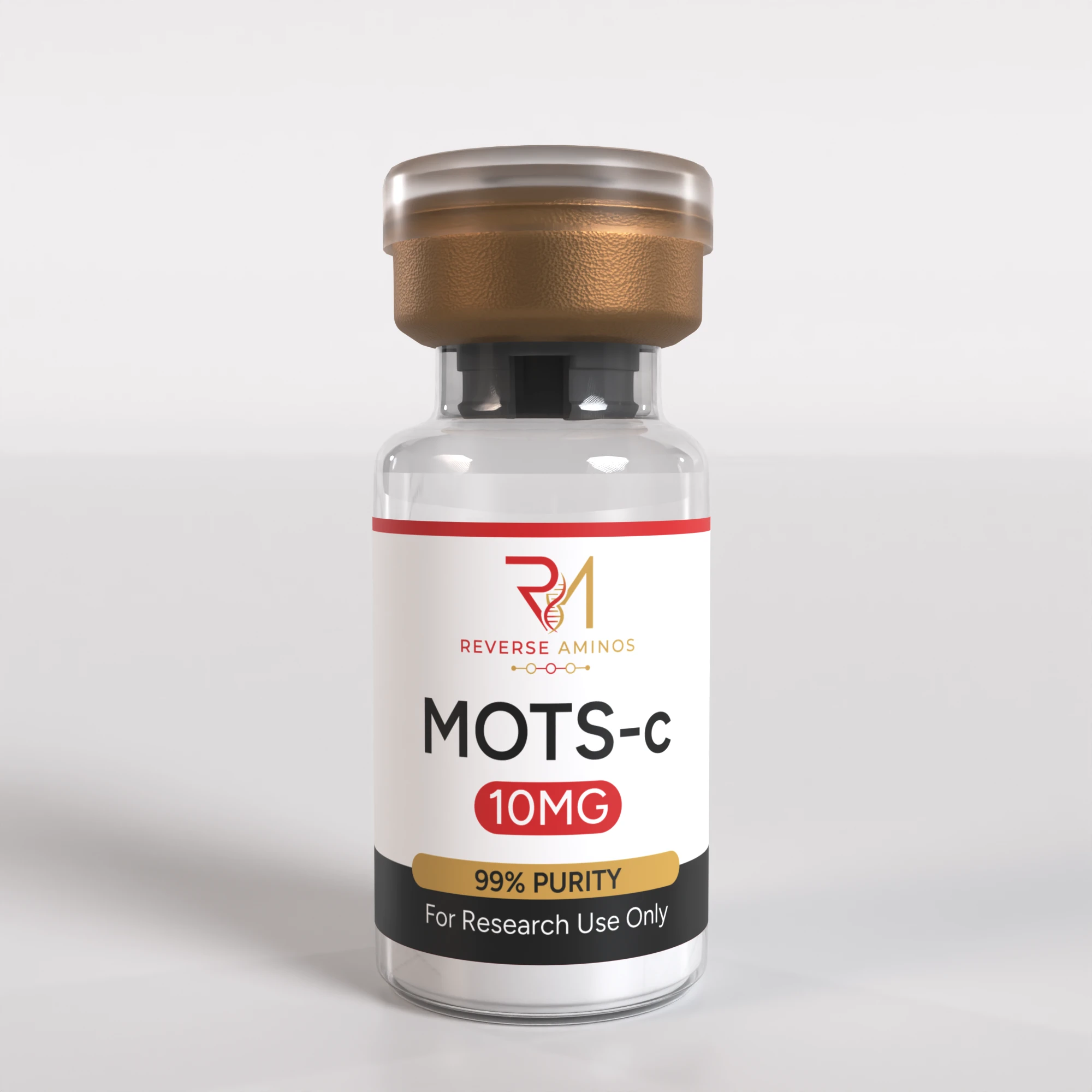

MOTS-c

MOTS-c is a research-use-only compound involved in mitochondrial biogenesis and energy metabolism. For research use only.

Price range: $81.00 through $123.00

Satisfaction Guaranteed

Secure
Payment

Third-party
Tested

Research Use Disclaimer

Research Use Only: All products offered are intended strictly for laboratory research purposes. Products are not for human consumption and are not intended for diagnostic, therapeutic, or medical use. By purchasing from our website, customers confirm they are qualified researchers or laboratories and understand the intended research-use designation.

MOTS-c: An Overview

MOTS-c, also known as Mitochondrial Oligomycin-Sensitive Exchanger Subunit c, is a compound associated with mitochondrial function and energy metabolism. This research-use-only compound has garnered attention for its potential role in cellular health and metabolism.

Research Context

The identification of MOTS-c was initially published in 2012 by researchers from the University of California, San Francisco (UCSF). The compound is derived from a larger protein known as PPARGC1A, which plays a key role in the regulation of mitochondrial biogenesis and function. Its discovery has opened avenues for studying metabolic pathways and their implications on overall cellular health.

Research Overview

MOTS-c is primarily investigated for its effects on energy metabolism, particularly in adipose tissue. Studies have shown that MOTS-c can influence lipid metabolism, insulin sensitivity, and the regulation of mitochondrial dynamics. This compound has been studied extensively in rodent models to explore its potential as a modulator of metabolic pathways relevant to aging and obesity.

Key Research Focus Areas

  • Mitochondrial Function: MOTS-c is believed to enhance the efficiency of mitochondrial function, particularly under conditions of stress or energy depletion.
  • Lipid Metabolism: Research indicates that MOTS-c can influence lipid accumulation and utilization in adipose tissue, potentially offering insights into metabolic disorders such as obesity and type 2 diabetes.
  • Inflammation and Oxidative Stress: Studies suggest that MOTS-c may help reduce inflammation and oxidative stress associated with metabolic syndrome, contributing to improved overall cellular health.

Compliance Disclaimer

This product is intended for research use only. It should not be used for human or animal consumption. Any use of this compound outside the scope of academic or scientific research is strictly prohibited.

Lorem ipsum dolor sit amet, consectetur adipiscing elit. Ut elit tellus, luctus nec ullamcorper mattis, pulvinar dapibus leo.

Lab Report
Date Added :
07/14/2026

MOTS-c: An Overview

MOTS-c, also known as Mitochondrial Oligomycin-Sensitive Exchanger Subunit c, is a compound associated with mitochondrial function and energy metabolism. This research-use-only compound has garnered attention for its potential role in cellular health and metabolism.

Research Context

The identification of MOTS-c was initially published in 2012 by researchers from the University of California, San Francisco (UCSF). The compound is derived from a larger protein known as PPARGC1A, which plays a key role in the regulation of mitochondrial biogenesis and function. Its discovery has opened avenues for studying metabolic pathways and their implications on overall cellular health.

Research Overview

MOTS-c is primarily investigated for its effects on energy metabolism, particularly in adipose tissue. Studies have shown that MOTS-c can influence lipid metabolism, insulin sensitivity, and the regulation of mitochondrial dynamics. This compound has been studied extensively in rodent models to explore its potential as a modulator of metabolic pathways relevant to aging and obesity.

Key Research Focus Areas

  • Mitochondrial Function: MOTS-c is believed to enhance the efficiency of mitochondrial function, particularly under conditions of stress or energy depletion.
  • Lipid Metabolism: Research indicates that MOTS-c can influence lipid accumulation and utilization in adipose tissue, potentially offering insights into metabolic disorders such as obesity and type 2 diabetes.
  • Inflammation and Oxidative Stress: Studies suggest that MOTS-c may help reduce inflammation and oxidative stress associated with metabolic syndrome, contributing to improved overall cellular health.

Compliance Disclaimer

This product is intended for research use only. It should not be used for human or animal consumption. Any use of this compound outside the scope of academic or scientific research is strictly prohibited.

Size

10MG, 20MG, 40MG

Related Peptides

Access Agreement Required

This site is restricted to 21+ users; all products are for laboratory research use only, are not FDA-approved, and are not intended for human/animal use or to diagnose, treat, cure, or prevent disease.

*By continuing, you confirm eligibility and legal compliance.