
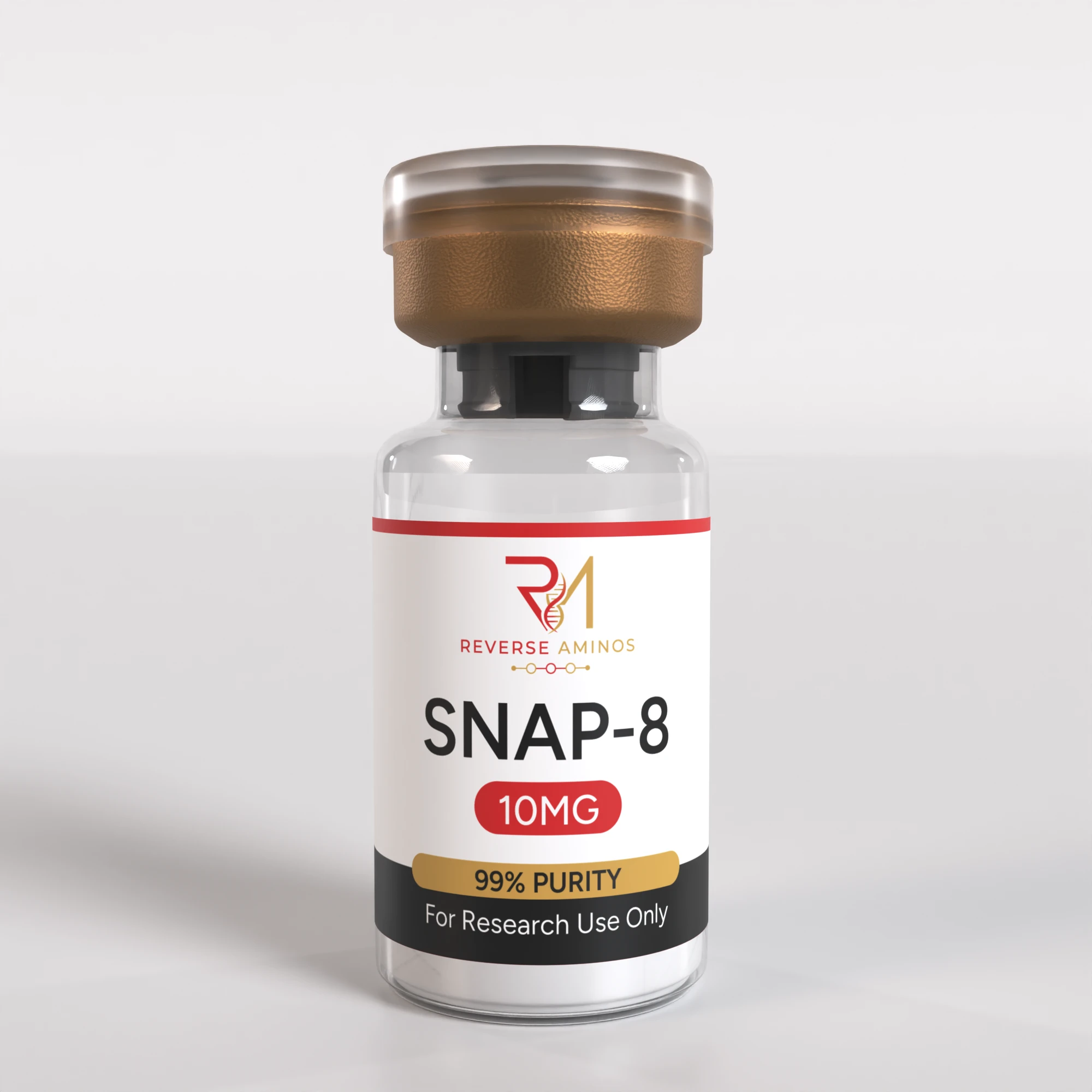

SNAP-8
SNAP-8 is a synthetic research compound that has garnered significant attention within the scientific community for its role in cellular communication and compound -based biological research. Researchers utilize SNAP-8 in laboratory settings to investigate molecular interactions, cellular signaling pathways, and mechanisms associated with compound activity.
Research Context
SNAP-8 has been extensively studied in controlled laboratory environments to better understand compound -mediated biological processes. Research has expanded to explore its involvement in cellular function, molecular signaling, and various biochemical pathways relevant to scientific investigation.
Research Overview
SNAP-8’s mechanism of action involves interactions with cellular signaling processes that are important for understanding compound behavior and molecular communication. Researchers employ this compound to investigate biological pathways, protein interactions, and cellular responses under experimental conditions. Its unique properties make it a valuable tool for scientific research applications.
Key Research Focus Areas
- Cellular Signaling Research: SNAP-8 has been used to investigate mechanisms involved in cellular communication and molecular signaling pathways.
- Compound Interaction Studies: Research indicates that SNAP-8 may play a role in understanding protein-compound interactions and cellular response mechanisms.
- Molecular Biology Research: The compound has demonstrated utility in examining biological processes related to cellular regulation and signaling activity.
- Biochemical Investigations: SNAP-8 may contribute to advancing the understanding of compound -based mechanisms and molecular function in controlled laboratory settings.
Final Compliance Disclaimer
SNAP-8 is for research use only. Not for human or animal consumption.
| Size | 10MG, 100MG |
|---|